The Angel of History by Bruno Arpaia
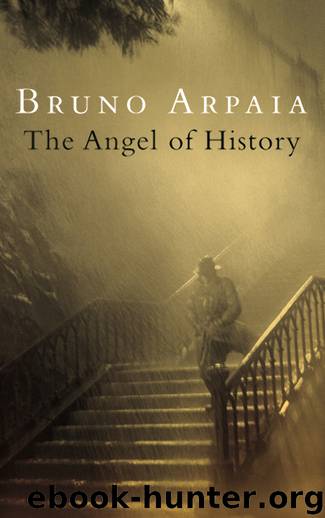
Author:Bruno Arpaia
Language: eng
Format: epub
Publisher: Canongate Books
Chapter Twenty-seven
They were his footsteps echoing through the atrium and carrying breathlessly up the stairs. He ran along the corridor, past the rooms filled with index cards and came to a hesitant stop at the door to the reading room. Benjamin heard every one of his footsteps, listened to them float through the silence. It was the first time he’d set foot in the library in four months. He’d imagined it as a homecoming but instead he felt like a stranger as he walked among the tables, under the vaulted ceilings. There were hardly any readers there, the clerks were all hidden in their offices and there was an icy silence. Discouraged, he leaned on the desk, holding his new library card in hand. He read it and reread it as he waited for someone to appear to fetch his books: ‘Numéro 3454,Benjamin Walter, Titres:Docteur en philosophie,critique littéraire. Adresse: 8, rue Dombasle.’ They’d even got his address wrong.
That’s when he heard the applause and saw the clerks emerging in a line from the stacks at the other end of the room. Georges Bataille came over to him with a smile.
‘Welcome,’ he said. ‘Welcome home.’
Louvet from the photostat room opened two bottles of wine he’d taken from his father’s cellar. Madame Grenelle from the loan desk had baked pastries.
‘Now you are safe back with us,’ said Bataille comfortingly and sentimentally. In a daze Benjamin ate pastries, shook hands and tried to find the words to thank everyone, although deep down he just felt that old weariness, that sense of resignation – like a person who only glances or smiles shyly at the world. Then Bataille took him by the arm and led him to his desk.
‘Work well,’ he told him with a hug.
From then on, that desk became the Maginot line of Benjamin, that room with its columns and tiles; it was from here that he pushed back the assaults of the world. ‘Leave while there’s still time,’ his friends said. Scholem wrote from Jerusalem. Adorno, Horkheimer, even Brecht told him to leave: ‘Go to Portugal, Cuba, the United States, get to Marseille and take the first boat out.’
‘What about a visa and money?’ he answered. And so he stayed. He came in to work in the early afternoon, turned on the art nouveau table lamp and lost himself in his reading as the light painted his face with amber reflections. For many days he was undecided whether to keep working on Baudelaire or to start a new essay on Rousseau and Gide for the Institute. ‘My hesitation,’ he wrote to Gretel Adorno, ‘is the fear of having to abandon the Baudelaire once I will have begun writing the sequel. The sequel will be a work of monumental breadth and it would be a delicate matter to have to start and stop again and again. This is, however, the risk I would have to take. I am constantly reminded of it by the gas mask in my small room – the
Download
This site does not store any files on its server. We only index and link to content provided by other sites. Please contact the content providers to delete copyright contents if any and email us, we'll remove relevant links or contents immediately.
Red by Erica Spindler(12545)
Crooked Kingdom: Book 2 (Six of Crows) by Bardugo Leigh(12288)
Twisted Palace by Erin Watt(11131)
Mindhunter: Inside the FBI's Elite Serial Crime Unit by John E. Douglas & Mark Olshaker(9287)
Fangirl by Rainbow Rowell(9210)
Never let me go by Kazuo Ishiguro(8846)
All the Light We Cannot See: A Novel by Anthony Doerr(8472)
A Man Called Ove: A Novel by Fredrik Backman(8414)
The Lover by Duras Marguerite(7875)
Confessions of an Ugly Stepsister by Gregory Maguire(7862)
Little Fires Everywhere by Celeste Ng(7167)
The Vegetarian by Han Kang(6273)
To All the Boys I've Loved Before by Jenny Han(5826)
The Shadow Of The Wind by Carlos Ruiz Zafón(5675)
On the Yard (New York Review Books Classics) by Braly Malcolm(5519)
Keepsake: True North #2 by Sarina Bowen(5405)
Dancing After Hours by Andre Dubus(5267)
Ken Follett - World without end by Ken Follett(4705)
The Perks of Being a Wallflower by Stephen Chbosky(4624)
